10 Foods Worth Limiting After You Look at the Cancer-Risk Evidence
As an editor covering healthy aging, I see a lot of dramatic food headlines. Most oversimplify the science. But when I went back to the major cancer agencies, a few everyday habits stood out enough to deserve a closer look.

If there's one thing I've learned from editing health stories, it's that the phrase “cancer-causing food” is usually too blunt to be useful. Cancer is multifactorial. Age, genetics, smoking, alcohol, excess body weight, physical activity, infections and environmental exposure all matter.
Diet still matters, though — and not every dietary exposure carries the same level of evidence. Processed meat and alcohol stand out more clearly than many of the foods that circulate in viral “never eat this again” posts.
So for this article, I wanted to separate the sensational claims from the habits that are actually worth paying attention to.
Hot Dogs
Hot dogs sit squarely in the processed-meat category. That matters because the World Health Organization's International Agency for Research on Cancer concluded that processed meat causes colorectal cancer.
One clarification is essential: that classification describes the strength of the evidence, not the size of the risk. It does not mean eating a hot dog carries the same danger as smoking.
Bacon
Bacon belongs to the same processed-meat category. The more useful question isn't whether someone should panic about Sunday breakfast; it's how frequently processed meat appears across the entire week.
If bacon, sausage or deli meat shows up almost every day, that's a very different dietary pattern from having it occasionally.
Sausages
Breakfast sausage, smoked sausage, cured sausage and similar products can all fall into this category. What surprised me while researching this article was how many foods people think of separately are really variations of the same processed-meat exposure.
Ham & Deli Meat
This is one of the easiest categories to overlook because a deli sandwich doesn't feel like “junk food.” But ham, salami and many packaged lunch meats are processed meats as well.
Rotating them with freshly cooked chicken, tuna, eggs, beans or other minimally processed proteins is a simple way to reduce the frequency without turning lunch into a complicated project.
Beef Jerky & Other Cured Meats
Jerky is often sold under a high-protein halo. But protein content doesn't tell you how processed a food is. If a product is cured, smoked or heavily preserved, it belongs in the processed-meat conversation too.
Beef
Beef is a different category. Red meat is not classified at the same evidence level as processed meat. IARC describes red meat as “probably carcinogenic to humans,” with the strongest associations centered on colorectal cancer.
That wording matters. It supports moderation — not the claim that every steak is dangerous.
Pork
Fresh pork also counts as red meat. Again, the editorial takeaway is less dramatic than many online lists make it sound: look at overall intake and frequency, and distinguish fresh meat from processed versions such as bacon and ham.
Lamb
Lamb is another red meat. For someone eating beef, pork or lamb most days of the week, reducing the overall amount can be more useful than obsessing over which one of the three is “worst.”
Alcohol
Alcohol is the item I think gets underestimated most often in food-and-health discussions. The National Cancer Institute links alcohol consumption with several cancers, including cancers of the mouth, throat, esophagus, liver, breast and colorectum.
Beer, wine and spirits all contain ethanol. Changing the type of drink doesn't remove that underlying exposure.

Sugary Drinks
This one requires a different explanation. Soda isn't classified as a carcinogen in the same way as processed meat or alcohol.
I include sugary drinks because of the indirect pathway: they make it easy to consume a large number of calories without much satiety, while excess body fat is associated with increased risk for multiple cancers.
In other words, this is a long-term weight and metabolic-health issue — not evidence that sugar in a single drink directly “feeds cancer.”
The evidence kept pointing back to the same idea: long-term health is built from patterns.
Food quality matters. So do activity, sleep, alcohol, tobacco, body weight, routine screening and appropriate medical care. There isn't one food to fear and there isn't one capsule that cancels out everything else.

That broader healthy-aging question is also what led me to look more closely at nutritional supplements positioned for people who are already trying to improve those fundamentals.
One Healthy-Aging Formula That Caught My Attention
While reviewing products in this category, The Stem Cell Solution® stood out because its formula is built around several compounds that regularly appear in healthy-aging and botanical supplement discussions.
I don't think any supplement should be framed as a cancer treatment or as a substitute for good food, exercise, screening or medical care. That's not the role it plays in this article.
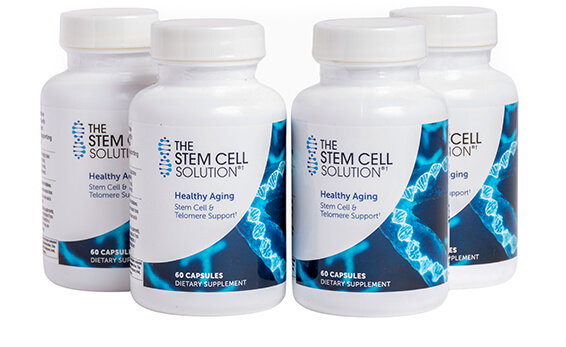
The ingredient list includes several names that readers interested in longevity supplements may already recognize:
- Astragaloside IV — a botanical compound derived from Astragalus.
- Pterostilbene — an antioxidant compound chemically related to resveratrol.
- Icariin — a plant-derived flavonoid used in traditional herbal preparations.
- Pterocarpus / Marsupium extracts — botanical ingredients used in traditional wellness formulations.
- Pine Bark OPCs — plant-derived oligomeric proanthocyanidins.
- L-Theanine — an amino acid naturally present in tea.
- Quercetin — a flavonoid found naturally in onions, berries, tea and other foods.
If that's where you are, the product page lays out the full formula, current pricing and guarantee so you can decide whether it belongs in your own routine.
Read More About The Stem Cell Solution®Sources & further reading
World Health Organization / International Agency for Research on Cancer — Carcinogenicity of red meat and processed meat
U.S. National Cancer Institute — Alcohol and Cancer Risk
U.S. National Cancer Institute — Obesity and Cancer
Health disclosure: This article is for general educational purposes only and is not medical advice. It is not intended to diagnose, treat, cure or prevent cancer or any other disease. No single food or supplement can guarantee cancer prevention.
The Stem Cell Solution® is presented here as a dietary supplement for general wellness and healthy-aging support. It is not presented as a cancer treatment or cancer-prevention product.
People with cancer, anyone undergoing cancer treatment, people taking prescription medication, pregnant or breastfeeding individuals, and those with significant medical conditions should speak with an appropriate healthcare professional before starting a dietary supplement.
This page contains an affiliate link. If a purchase is made through that link, the publisher may receive compensation at no additional cost to the purchaser.